Tingkatkan kompetensi Anda menjadi Medical Virtual Assistant dan Medical Coder berstandar Internasional. Dapatkan akses eksklusif simulator Rekam Medis (EMR) dan lamar pekerjaan dari rumah sakit Amerika langsung dari rumah.
Kami tidak sekadar menjual teori. Kami menyediakan "Mesin Simulasi" tempat Anda berlatih sebelum terjun ke klien nyata.
Praktik langsung mengisi rekam medis (SOAP) standar Amerika. Bangun *muscle memory* Anda.
Akses langsung ke ribuan lowongan remote MVA dari bursa kerja internasional secara *real-time*.
Bedah kasus, tanya jawab ICD-10, dan diskusi bersama praktisi senior di IHRH Community.
Daftar pelatihan, webinar, dan sertifikasi yang diselenggarakan IHRH.
Tingkatkan skill medis dan keperawatan digital Anda dengan modul bacaan eksklusif.
Starter system untuk membantu tenaga kesehatan menyusun materi edukasi kesehatan yang lebih rapi, profesional, dan terarah.
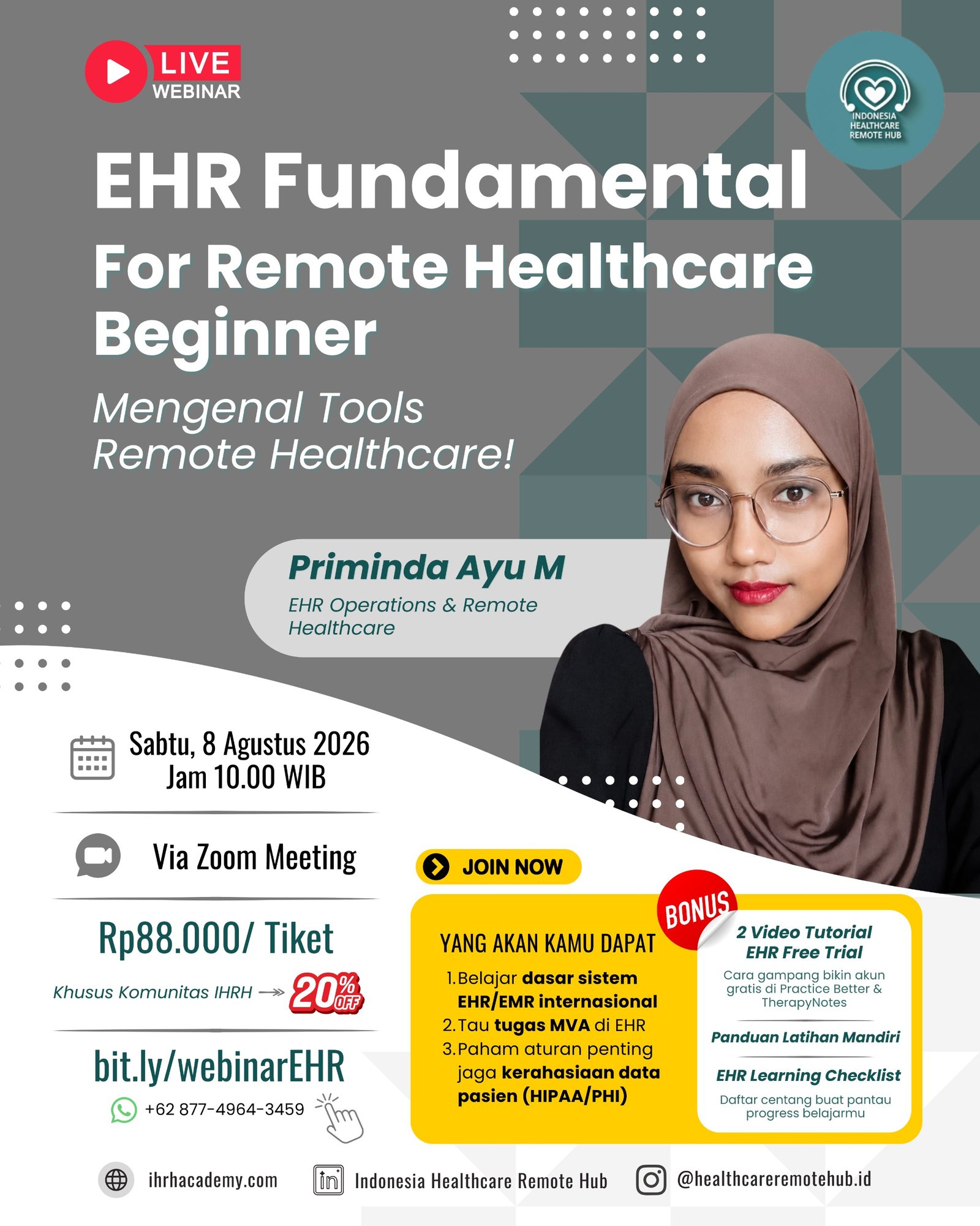
Edisi perdana yang dirancang untuk membantu tenaga kesehatan Indonesia memahami sistem, workflow, dan kesiapan dasar menuju remote healthcare support role.
Artikel edukasi dan perkembangan terbaru di dunia Kesehatan Digital.
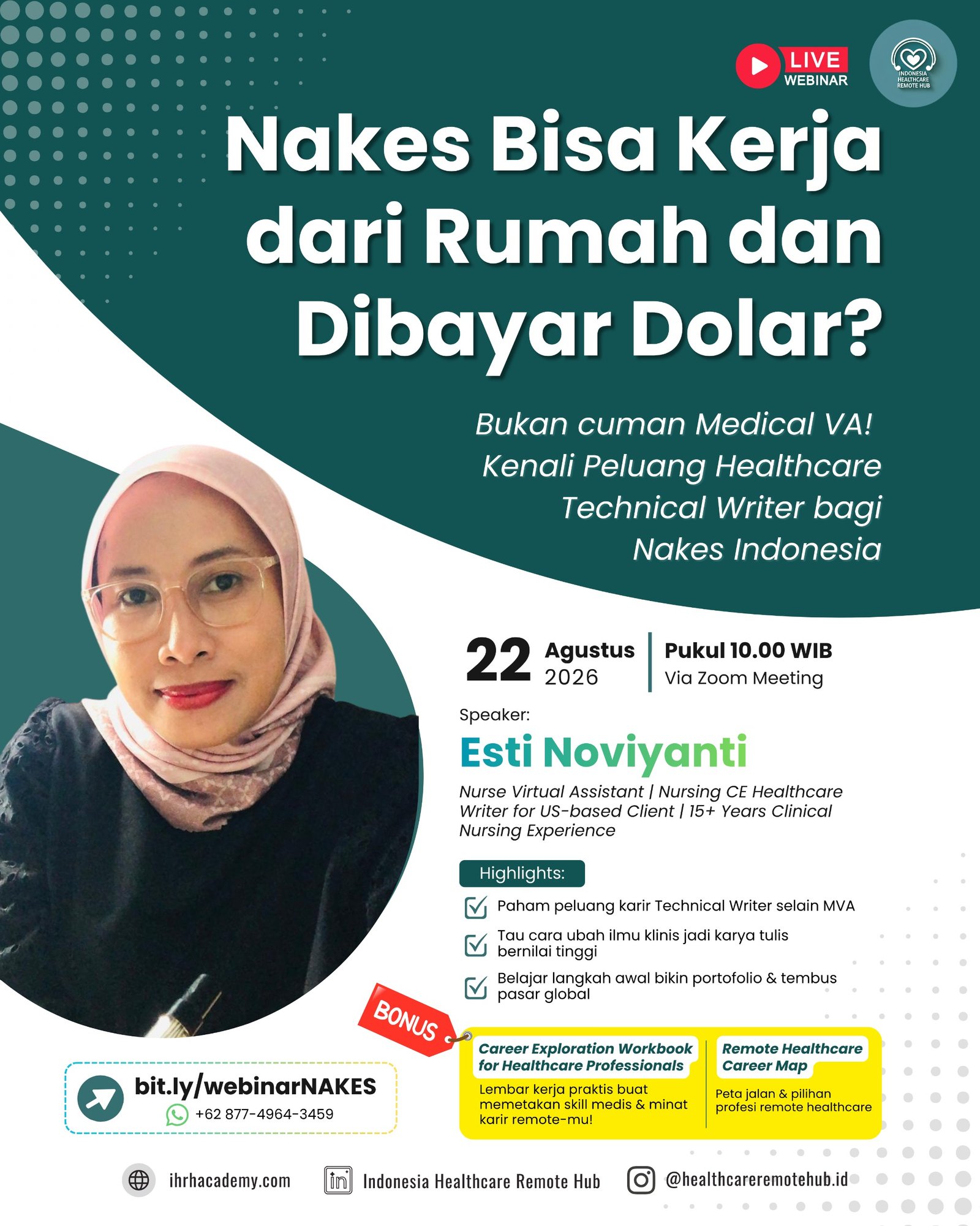
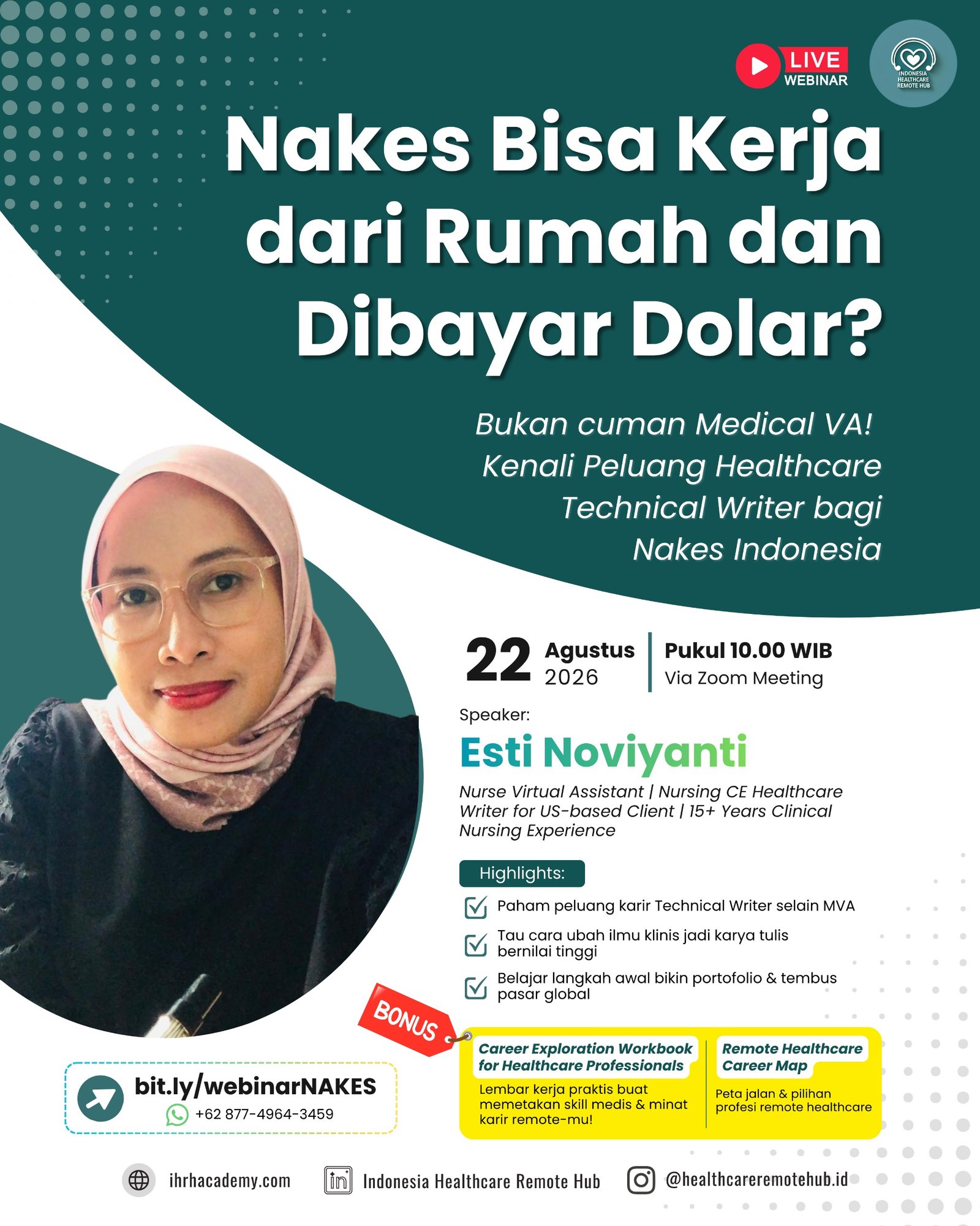
Esti Noviyanti, S.Kep.
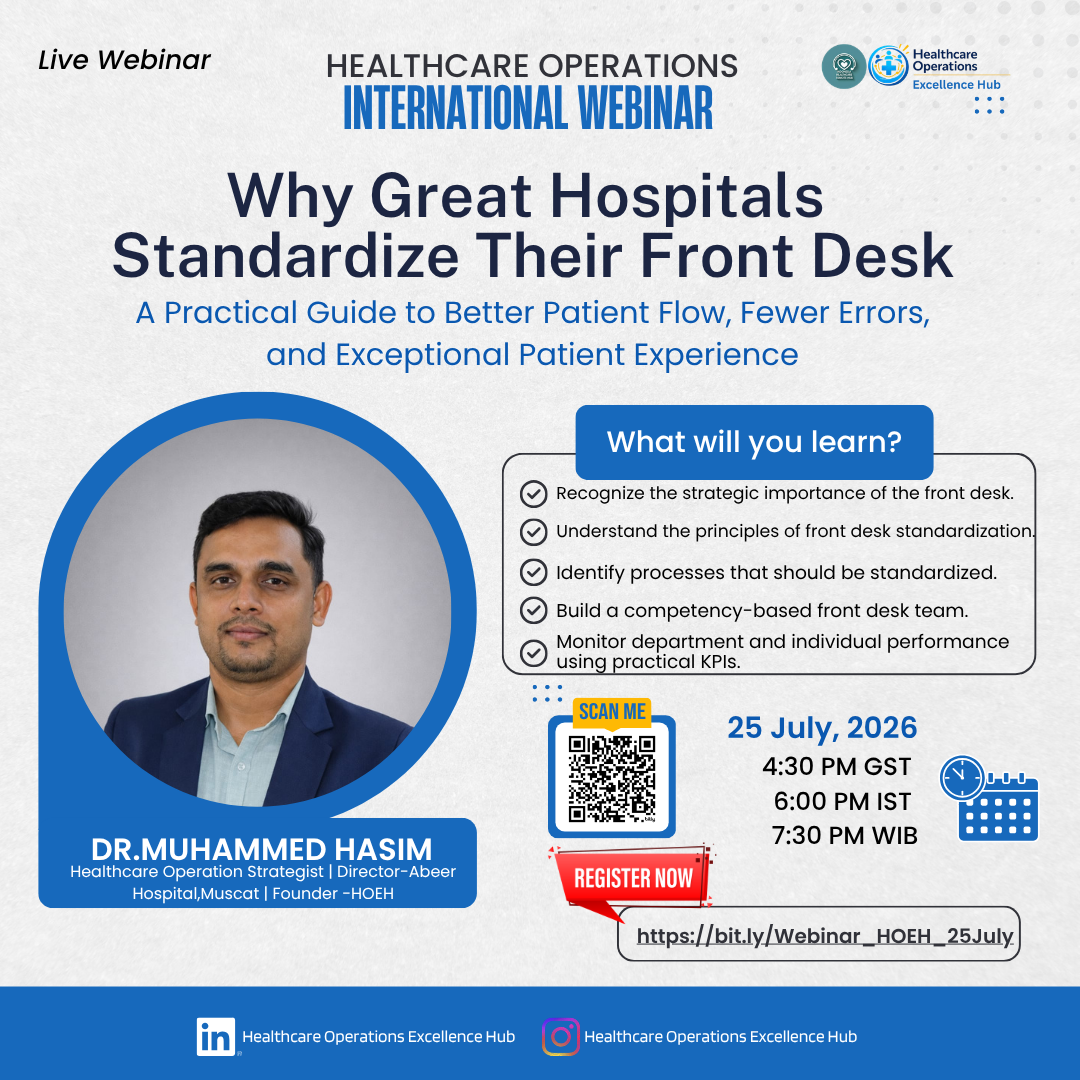
Reducing Revenue Leakage in Healthcare with Medical Virtual Assistants Guest Author: Dr. Muhammed Hasim Healthcare Operations Consultant, Hospital Director, and Process Improvement Specialist GCC Healthcare Systems In healthcare, financial losses do not always come from major system failures. More often, they happen quietly through small operational gaps that go unnoticed but continue to drain revenue over time. Missed documentation, delayed insurance approvals, unbilled services, and follow-ups that never happen may seem minor on their own. But when these issues accumulate across the patient journey, they can cost healthcare organizations significant revenue. This is where Medical Virtual Assistants (MVAs) can make a meaningful difference. Understanding Revenue Leakage in Healthcare Revenue leakage refers to revenue that should have been earned but is never captured, billed, or collected because of inefficiencies in processes and workflow management. Common sources of revenue leakage include: 1. Incorrect or incomplete patient registration 2. Missing insurance information or eligibility errors 3. Services provided but not billed 4. Documentation gaps that affect claim submission 5. Delayed or missed pre-authorizations 6. Poor follow-up on rejected or pending claims These are not always clinical problems. In many cases, they are operational issues that directly affect financial performance. The Hidden Cost of Inefficient Processes Many healthcare organizations focus heavily on increasing patient volume. However, growth without strong process control often creates even more challenges. Without efficient systems in place, healthcare providers may experience: 1. Higher claim rejection rates 2. Delayed billing cycles 3. Lost revenue opportunities 4. Staff overload and burnout In many situations, the issue is not a lack of patient activity. The real problem is the inability to convert that activity into revenue efficiently. How Medical Virtual Assistants Help Reduce Revenue Leakage Medical Virtual Assistants can strengthen operational workflows and support the revenue cycle in practical and measurable ways. 1. Accurate Patient Registration and Insurance Verification The revenue cycle begins long before billing. Errors at the registration stage can create financial problems later in the process. MVAs help by ensuring: - Accurate entry of patient demographic information - Real-time insurance eligibility checks - Proper verification of coverage and policy details This reduces front-end errors and helps prevent claim denials later. 2. Pre-Authorization and Documentation Support Delayed pre-authorizations are one of the most common causes of service delays, patient drop-offs, and unbilled procedures. MVAs can support this process by: - Initiating and tracking pre-authorizations - Coordinating with insurance companies - Ensuring documentation is complete and ready for submission With better coordination and timely follow-up, healthcare organizations can reduce disruptions and improve service continuity. 3. Charge Capture and Billing Accuracy One of the most overlooked causes of revenue leakage is simple but costly: services are delivered, but not properly documented or billed. MVAs can help by: - Supporting timely charge entry - Cross-checking services provided against documentation - Helping ensure that no billable service is missed This improves billing accuracy and protects revenue that has already been earned. 4. Claims Submission and Follow-Up Rejected or delayed claims are not only financial setbacks. They also point to weaknesses in process management. MVAs can contribute by: - Tracking claim status - Managing resubmissions - Following up with insurers - Helping reduce turnaround time (TAT) Consistent follow-up can improve collections and minimize preventable losses. 5. Patient Communication and Conversion Support In outpatient settings, many services are never completed simply because patients do not receive clear guidance or timely follow-up. MVAs can support patient communication by: - Explaining procedures and administrative requirements - Clarifying cost-related information - Following up on pending appointments or services This helps improve service completion rates and reduces lost revenue opportunities. Operational Impact of Medical Virtual Assistants When integrated effectively, Medical Virtual Assistants can contribute to meaningful operational improvements, including: 1. Reduced claim rejection rates 2. Faster billing cycles 3. Improved cash flow 4. Higher service-to-billing conversion 5. Better coordination across departments 6. Reduced workload for front-desk and clinical teams These outcomes show that MVAs are not only administrative support staff. They can also become important contributors to financial sustainability. MVAs Are Not Just Support Staff, but Strategic Assets Healthcare organizations often view virtual assistants as a cost-saving solution. In reality, their role can go much further. Medical Virtual Assistants can function as revenue-protection partners by helping healthcare teams close operational gaps before they become financial losses. The difference lies in mindset: 1. Cost-based view: MVAs are seen only as support staff 2. Strategic view: MVAs are recognized as revenue enablers Organizations that adopt the second perspective are more likely to unlock the full value of this role. Why Proper Training Matters Revenue cycle processes are complex. An untrained assistant may increase errors, while a properly trained Medical Virtual Assistant can help improve both operational and financial performance. Effective training should include: 1. Insurance workflows and payer requirements 2. Documentation standards 3. Billing and coding fundamentals 4. Communication protocols 5. Process discipline and accountability The quality of training directly influences the quality of the outcomes. Final Thought Revenue leakage is not always visible, but it is often present. The answer is not simply to bring in more patients. It is to build better processes that protect the value of every service already delivered. Medical Virtual Assistants can play a critical role in closing operational gaps, protecting revenue, and improving efficiency across healthcare systems. As remote healthcare roles continue to grow, Medical Virtual Assistants are becoming increasingly valuable, not only as administrative support, but also as part of a more efficient and financially sustainable healthcare system.
Baca Selengkapnya
Esti Noviyanti, S.Kep.
Healthcare is one of the most complex operational environments in the world. Behind every patient consultation lies a network of administrative coordination, documentation, scheduling, insurance processing, communication, and data management. While clinical teams focus on patient care, a significant portion of healthcare operations depends on administrative efficiency. When these processes slow down, the impact is immediate longer waiting times, delayed decisions, staff burnout, and operational inefficiencies. This is where Virtual Assistants (VAs) are becoming an increasingly valuable asset in healthcare operations. The Growing Administrative Burden in Healthcare Modern healthcare organizations deal with enormous administrative workloads. Hospitals and clinics manage: Appointment scheduling Patient communication Medical documentation Insurance coordination Data entry and reporting Follow-up reminders Operational dashboards Studies consistently show that clinicians and administrators spend a large percentage of their time on non-clinical administrative tasks. This not only reduces productivity but also diverts focus away from patient care. Healthcare leaders are now exploring smarter ways to manage these operational demands. Virtual assistants provide one of the most effective solutions. Where Virtual Assistants Add Value in Healthcare Virtual assistants can support healthcare organizations in several operational areas. 1. Appointment and Patient Communication Management Missed appointments and inefficient scheduling are common challenges in healthcare. Virtual assistants can handle: Appointment confirmations Patient reminders Follow-up calls Rescheduling coordination This improves patient attendance and reduces revenue loss from missed appointments. 2. Administrative Documentation Support Documentation is a major operational burden in hospitals and clinics. Virtual assistants can assist with: Data entry Record organization Documentation formatting Report preparation By reducing documentation workload, healthcare professionals gain more time to focus on patient care. 3. Insurance and Billing Coordination Insurance verification and claims processing are time-consuming tasks. Virtual assistants trained in healthcare administration can help with: Insurance eligibility verification Claims documentation support Billing coordination Payment follow-ups This improves revenue cycle efficiency and reduces delays. 4. Operational Reporting and Dashboard Support Healthcare leaders rely on operational metrics to monitor performance. Virtual assistants can support teams by preparing: Daily operational reports Patient flow dashboards Appointment conversion reports Data summaries for management reviews Access to structured data enables faster and better decision-making. 5. Digital Presence and Patient Engagement In today’s digital environment, healthcare organizations must maintain strong online engagement. Virtual assistants can manage: Social media communication Website updates Patient inquiries Online appointment requests This helps healthcare providers stay responsive and accessible to patients. The Strategic Advantage of Virtual Assistants The value of virtual assistants is not only cost efficiency it is operational focus. When administrative workload is streamlined, healthcare teams can focus more on: Patient care Clinical decision-making Operational improvement Strategic growth For healthcare leaders, this creates a more sustainable and efficient healthcare system. Preparing Virtual Assistants for Healthcare Healthcare operations require accuracy, confidentiality, and structured processes. Virtual assistants supporting healthcare organizations should be trained in: Healthcare communication etiquette Data privacy and confidentiality Documentation accuracy Process discipline Basic healthcare workflow understanding Training institutions such as Virtual Assistant Academy play a critical role in preparing professionals for these responsibilities. The Future of Healthcare Operations Healthcare systems worldwide are under pressure to deliver better care with greater efficiency. Technology, automation, and remote support models are transforming how administrative work is managed. Virtual assistants are becoming an essential part of this transformation by helping healthcare organizations maintain operational efficiency without increasing administrative burden. For healthcare leaders, the question is no longer whether virtual assistants can support healthcare operations, but how effectively they can be integrated into the system. Author Dr. Muhammed Hasim Healthcare Operations Consultant Hospital Director | Process Improvement Specialist GCC Healthcare Systems
Baca Selengkapnya
Esti Noviyanti, S.Kep.
Blog perdana IHRH Academy untuk membuka wawasan tentang perjalanan tenaga kesehatan memasuki dunia kerja digital. 🌿 Pendahuluan Dalam beberapa tahun terakhir, dunia kesehatan mengalami perubahan besar—bukan hanya pada teknologi klinis, tetapi juga pada cara kerja tenaga kesehatan. Banyak pekerjaan administratif, edukasi pasien, dokumentasi, hingga manajemen data kini dilakukan secara jarak jauh (remote). Dari sinilah muncul satu profesi baru yang semakin dicari: Medical Virtual Assistant (MVA). Profesi ini membuka peluang luas bagi tenaga kesehatan Indonesia yang ingin berkembang, tetap berkarya, dan punya fleksibilitas hidup tanpa harus meninggalkan akar profesinya. Dan melalui blog perdana ini, IHRH Academy ingin memperkenalkan pondasi utamanya: pemahaman menyeluruh tentang siapa itu MVA, kenapa profesi ini hadir, dan bagaimana peran ini memberi makna baru bagi kita para nakes. 🩺 Apa Itu Medical Virtual Assistant (MVA)? Medical Virtual Assistant (MVA) adalah tenaga pendukung administrasi dan operasional layanan kesehatan yang bekerja secara jarak jauh (remote). Mereka membantu dokter, klinik, rumah sakit, maupun perusahaan kesehatan dalam proses-proses seperti: 1. Dokumentasi klinis 2. Data entry pasien 3. Manajemen jadwal 4. Billing & insurance 5. Customer support 6. Edukasi pasien 7. Pengelolaan EMR dan berbagai tugas administratif lain sesuai kebutuhan provider MVA biasanya berasal dari latar belakang medis atau keperawatan, sehingga memahami alur klinis dan istilah medis lebih baik dibanding admin biasa. Di Amerika dan negara lain mereka sering disebut: Virtual Medical Assistant (VMA) Healthcare Virtual Assistant (HVA) Remote Medical Assistant Medical Admin Virtual Support Indonesia mengenalnya dengan sebutan MVA / HVA sesuai konteks industri. 🌍 Bagaimana Asal Mula MVA Muncul? Profesi ini berkembang pesat sejak tahun 2018–2020, terutama di Amerika, akibat: Beban administrasi yang makin besar pada klinik dan dokter. Krisis tenaga kesehatan sehingga dukungan jarak jauh menjadi solusi. Perkembangan EMR membuat pekerjaan bisa diselesaikan tanpa tatap muka. Tren remote work global yang semakin matang. Kebutuhan efisiensi biaya — mengalihdayakan (outsourcing) tugas non-klinis. Menurut beberapa sumber seperti Reva Global Medical, Pearl Talent, dan Practolytics, tren penggunaan MVA meningkat karena tenaga kesehatan membutuhkan bantuan back-office yang stabil tanpa menambah beban operasional klinik. Di Asia Tenggara, perkembangan ini baru terasa setelah pandemi, dan Indonesia sendiri mulai masuk arusnya sejak 2022–2024. 👩⚕️ Siapa yang Bisa Menjadi MVA? Pekerjaan ini paling cocok untuk: Perawat Bidan Tenaga rekam medis Farmasi Tenaga kesehatan yang ingin remote Fresh graduates yang ingin exposure digital health Orang dengan pengalaman klinis yang ingin transisi karier tetap relevan Keunggulan nakes adalah mereka paham konteks klinis dan bahasa medis, sehingga lebih cepat adaptasi. ⚙️ Bagaimana Seorang MVA Bekerja? Cara kerja MVA biasanya: bekerja dari rumah atau co-working space menggunakan laptop dan internet stabil terhubung ke EMR/CRM klinik berkomunikasi lewat email, chat, atau video call mengikuti SOP klinik mengerjakan tugas administratif sesuai jam kerja atau shift Beberapa tugas bersifat real-time (misal live scribing), sebagian lagi asinkron (misal laporan, data entry). Skill wajib biasanya meliputi: Microsoft / Google Workspace EMR/CRM dasar komunikasi profesional medical terminology problem solving confidentiality & data privacy Kenapa Profesi MVA Penting di Tahun-Tahun Ini? Ada tiga alasan utama: 1. Transformasi digital kesehatan tidak akan mundur ke belakang. Klinik modern ingin efisiensi, otomatisasi, dan dukungan administratif pintar. 2. Nakes butuh jalur karier alternatif yang tetap terhormat. Tidak semua ingin shift panjang seumur hidup. 3. Industri kesehatan butuh talent yang mengerti medis + teknologi. Dan Indonesia punya potensi besar untuk menyuplai kebutuhan global. 🌸 Bagaimana IHRH Hadir dalam Perjalanan Ini? Indonesia Healthcare RemoteHub (IHRH) lahir dari keresahan dan harapan yang sama: banyak tenaga kesehatan Indonesia ingin transisi ke dunia digital, tetapi bingung mulai dari mana. IHRH hadir untuk: memberikan edukasi yang terstruktur membangun komunitas yang saling menguatkan membuka peluang kolaborasi menyediakan program pembelajaran profesional berbasis nilai IHRH percaya bahwa tenaga kesehatan Indonesia layak tampil di dunia global—bermodal kompetensi, kemandirian, dan karakter yang kokoh. 🌟 Kesimpulan Profesi Medical Virtual Assistant adalah peluang nyata, bukan tren sesaat. Ia lahir dari kebutuhan industri kesehatan modern dan menawarkan ruang baru bagi tenaga kesehatan untuk terus berkarya dalam cara yang lebih fleksibel, manusiawi, dan bermakna. Dan melalui blog perdana ini, IHRH Academy ingin membuka pintu perjalanan ini: perjalanan belajar, berkembang, dan saling menguatkan sebagai komunitas nakes Indonesia yang siap menghadapi masa depan digital kesehatan. ✍️ ABOUT THE AUTHOR Ditulis oleh Esti, Founder Indonesia Healthcare RemoteHub (IHRH), Healthcare Virtual Assistant | Technical Writer in Nursing CE | MAA Certified 📅 Tanggal Publikasi: 25 November 2025 📚 Referensi Reva Global Medical – The Rise of Virtual Medical Assistants, 2024 Pearl Talent – What Is a Medical Virtual Assistant?, 2023 Practolytics – The Role of VMAs in Modern Healthcare, 2024 Health Tech Resources – Benefits of Remote Medical Staffing, 2023 ⚠️ Disclaimer Konten ini bersifat edukatif dan tidak menggantikan nasihat medis atau konsultasi profesional. Informasi dapat berubah sesuai perkembangan industri kesehatan dan teknologi digital.
Baca SelengkapnyaPotret semangat belajar dan berkembang bersama komunitas Nakes digital terbesar di Indonesia.
Dokumentasi Kegiatan
Grow Together Live Session with Vincent Petersen (MSV) Mastering the Interview: Communicating Your Value with Confidence
Lihat Resolusi Penuh
Dokumentasi Kegiatan
Grow Together Live – Expert Session Topic: Storytelling for Healthcare Professionals Grow and Glow Through Words: Creating Meaningful Content from Healthcare Experience
Lihat Resolusi Penuh
Dokumentasi Kegiatan
Grow Together Live: Inside the World of Medical Insurance From Diagnosis to Claim Approval Learn directly from a medical insurance professional about the claim workflow, ICD-10, and remote career opportunities for HVAs.
Lihat Resolusi Penuh
Dokumentasi Kegiatan
IHRH: Grow Together Live Boosting Clinical Operations with EMR: Practical Skills for Healthcare Virtual Assistants
Lihat Resolusi Penuh
Dokumentasi Kegiatan
Community Live Session – Coffee Talk with Clinical Psychologist Judul: "Mental Sehat Awal Karir HVA: Solusi Beyond Burnout untuk Tetap Bahagia dan Produktif" Narasumber: Dr. Yulisa Susanti, M.Si., M.Psi, Psikolog
Lihat Resolusi Penuh
Dokumentasi Kegiatan
IHRH: Grow Together Live Expert Session: Personal Branding for Healthcare VA
Lihat Resolusi PenuhTemukan jawaban cepat untuk pertanyaan seputar program dan layanan IHRH Academy.